
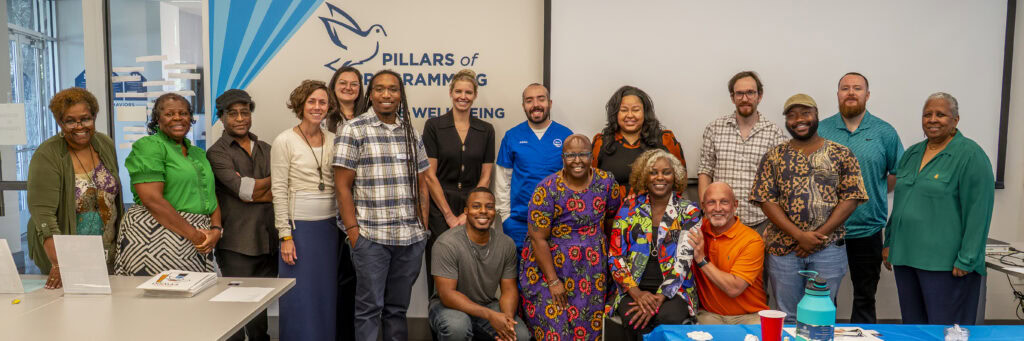
From Barriers to Breakthroughs: Celebrating Success Through IPS Supported Employment
Dismas House recently hosted its Individual Placement and Support (IPS) Steering Committee Meeting, bringing together…
June 11, 2026
Each June, National PTSD Awareness Month shines a light on the emotional impact of trauma, stress, and mental health challenges that affect millions of people every year. While conversations often focus on Post-Traumatic Stress Disorder (PTSD), another stress-related condition, like Adjustment Disorder, deserves attention as well.
Adjustment Disorder is one of the most common, yet most misunderstood, mental health conditions. It can affect anyone navigating a major life change, loss, or stressful event. For residents of Dismas House who are transitioning from incarceration back into the community, the emotional challenges of reentry can create significant stress. Stress that impacts mental health, relationships, and recovery.
Adjustment Disorder occurs when someone experiences emotional or behavioral symptoms in response to a stressful life event or major transition. These reactions are more intense than what would typically be expected. They can interfere with daily functioning, work, recovery goals, or relationships.
For individuals returning from incarceration, reentry itself can become a major adjustment period. Returning home may be positive and hopeful. At the same time, it can also bring overwhelming pressure, uncertainty, and fear.
Common stressors for formerly incarcerated individuals may include:
Residents at Dismas House often work hard to rebuild stability while navigating these stressors all at once. For some, the emotional weight of reentry becomes overwhelming. It can trigger symptoms of Adjustment Disorder and make even daily responsibilities feel difficult to manage.
Symptoms typically begin within three months of a stressful event or transition and may include:
For people with a history of incarceration, these symptoms are sometimes misunderstood. What may appear to be resistance, lack of motivation, or defiance may actually be emotional distress and difficulty adjusting to change.
Many individuals involved in the justice system have experienced significant trauma long before incarceration. Histories of childhood adversity, violence, addiction, poverty, grief, or unstable housing are common among justice-involved populations.
Incarceration itself can also be traumatic. The loss of freedom. Separation from loved ones. The constant emotional stress of surviving within an institutional environment. These experiences do not simply disappear after release.
Many individuals leave incarceration carrying survival-based coping mechanisms that once protected them. However, those same coping patterns can create challenges during reentry, especially when trying to rebuild trust, relationships, and emotional stability.
Because of this, some residents may experience symptoms related to both trauma and Adjustment Disorder during reentry. During National PTSD Awareness Month, it is important to recognize that healing from incarceration often includes addressing emotional stress, trauma-related experiences, and the psychological impact of starting over.
Dismas House provides far more than a place to stay. Through stable housing, accountability, peer support, structure, and compassionate care, residents are given the foundation to heal and rebuild their lives. In an environment where people feel safe, supported, and seen, they begin developing healthy coping skills, strengthening recovery, rebuilding confidence, reconnecting with purpose, and overcoming the shame and isolation that so often accompany reentry. When those challenges are addressed early, individuals are better equipped to succeed not only in recovery, but in work, relationships, and long-term stability.
The good news is that Adjustment Disorder is treatable, and recovery is possible. Healing often begins when individuals have access to the right support systems and resources. Individual counseling, trauma-informed care, Cognitive Behavioral Therapy (CBT), peer recovery support, and group counseling can all help people process difficult emotions and develop healthier coping strategies. For some, substance use treatment, case management, and connections to community resources also play an important role in creating stability and long-term success.
Daily habits and routines can also make a meaningful difference during reentry. Maintaining structure, attending recovery meetings or support groups, practicing healthy communication, exercising, and prioritizing sleep all support emotional wellness and resilience. Equally important is learning to ask for help when feeling overwhelmed and recognizing progress along the way, even small victories that signal growth and healing.
Reentry after incarceration is not simply about finding housing or employment. It is also an emotional and psychological transition. During National PTSD Awareness Month, conversations about mental health should include the unique challenges faced by formerly incarcerated individuals who are working to rebuild their lives.
Adjustment Disorder reminds us that major life changes can affect anyone’s mental health, especially when stress, trauma, and uncertainty overlap. With support, structure, and compassionate care, healing and successful reintegration are possible.
Dismas House recently hosted its Individual Placement and Support (IPS) Steering Committee Meeting, bringing together…
“It all started with someone being willing to give me a chance.” That’s how Marcus…

One caring mentor can make all the difference for someone preparing to return home from…

Dismas House recently gathered residents, volunteers, community partners, board members, supporters, and friends for our…
When Richard first walked through the doors of Dismas House, he carried very little with…
Each June, National PTSD Awareness Month shines a light on the emotional impact of trauma,…